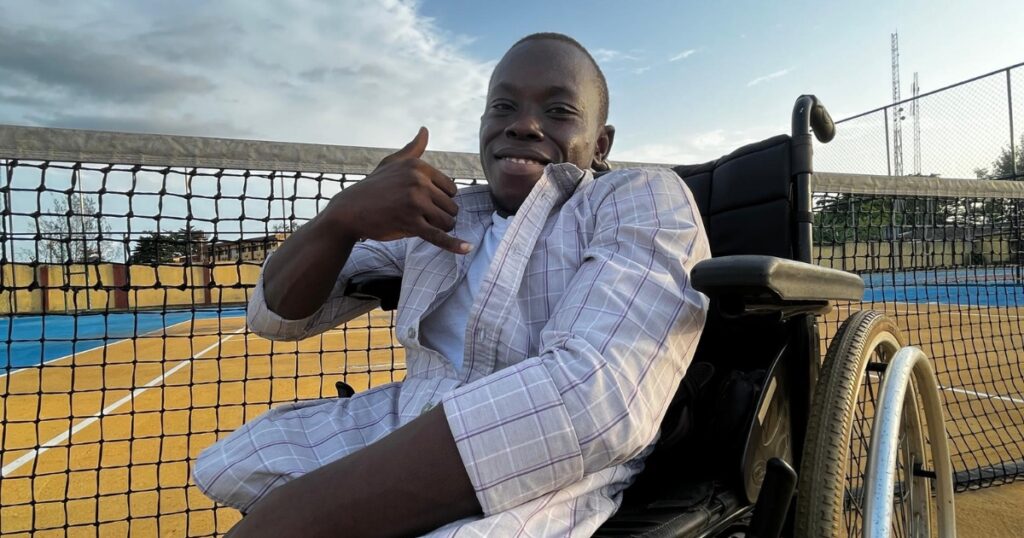
I was born on the 15th of October 2002 to the family of pastor and pastor Mrs Oluremi Samuel at Ayinke House, Lagos State University Teaching Hospital (LASUTH) where I was diagnosed with Spina Bifida and later referred to Lagos university teaching hospital (LUTH).
Two weeks after birth, treatment on a full scale started. I went under about three to four major surgeries under some of the most renowned neuro, orthopaedic, and plastic surgeons, to see if there could be any correction for some deformities but all proved abortive.
I remember my parents telling me one of the surgeons said: “This boy would be able to do anything on his own, he would basically be a vegetable”, but here I am today, a graduate of accounting, currently observing my National Youth Service Corps (NYSC) program.
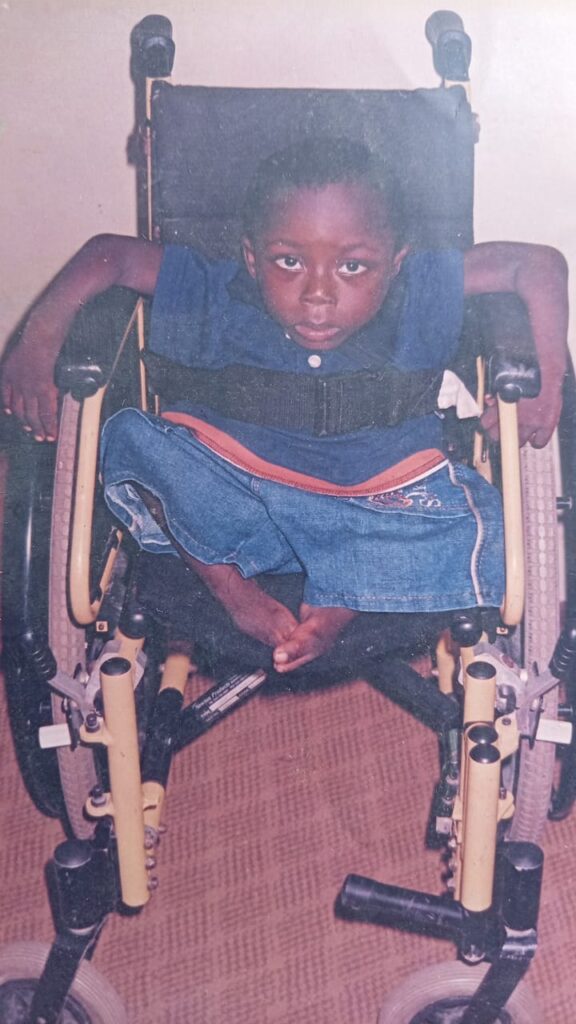
My parents believed that there was nothing God could not do and they decided to keep me and raise me in the very best way they could. They believed that a miracle will happen with my Spina Bifida, and until then, were going raise and train me to live and live independently, teaching me that I am only going to live with them for a while so I have to learn how to survive without them.
It was difficult at first because I saw it as punishment but as I grew, I really understood how great of a favour they had done for me. They insisted I must go to school and learn a skill like every other child without disability and embrace my Spina Bifida.
My primary school days were really beautiful memories. I had really nice friends who saw me as a child and a person first before seeing my Spina Bifida. I remember always running around with them playing; police and thief, ice and water and other games (games played amongst children in Nigeria) and I did not have any reason to be discriminated against. The most I got from other kids is being asked; why can’t you walk, what happened to your legs, is this how you were born?
I usually just casually answer them maybe because we were still kids and did not really know much about right and wrong, disability and discrimination. I personally did not know. I just knew I could not walk like every other person.
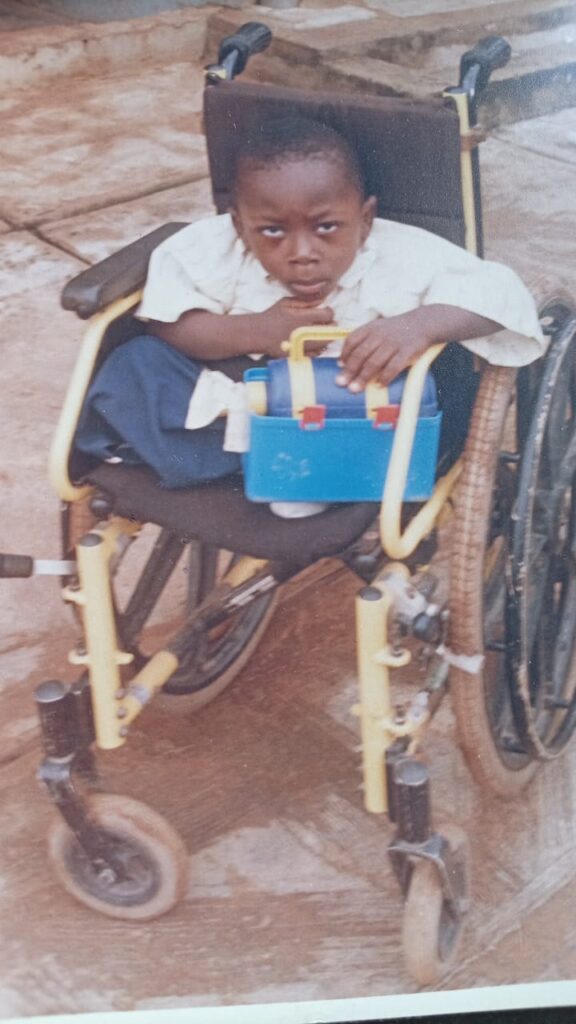
Somewhere around the time I was in primary school, I had to change schools but it was really difficult than we had imagined. The first and second school we applied to promised to accept me but on the day I was supposed resume they told me I could not stay because they did not have the facilities to cater for me. The third one also had a similar story but they showed me that they really did not have the facilities (my classroom and hostel were upstairs) and they apologised for the inconvenience.
I spent about a year and a couple of months before a pastor friend of our family introduced us to a school that was willing to accept me, though I had to stay as a boarding student because the school was far from home.
My first experience in boarding school was not exactly what I expected. It was fun and I really enjoyed being there. I had really nice teachers who were patient and accommodating. My classmates were also nice and kind. We were one big family. There were days I did not like being there because I was not as free as I wanted to be but they never made me uncomfortable. I went through every phrase there like other students; days we were being praised and days we were being disciplined.
After about a session, seeing how I was able to successfully stay in a boarding school, I was sent to a secondary boarding school. Moreover, if I had stay in a day school I would not have had anyone to come back home to stay with, so going to a boarding school was the most viable option.
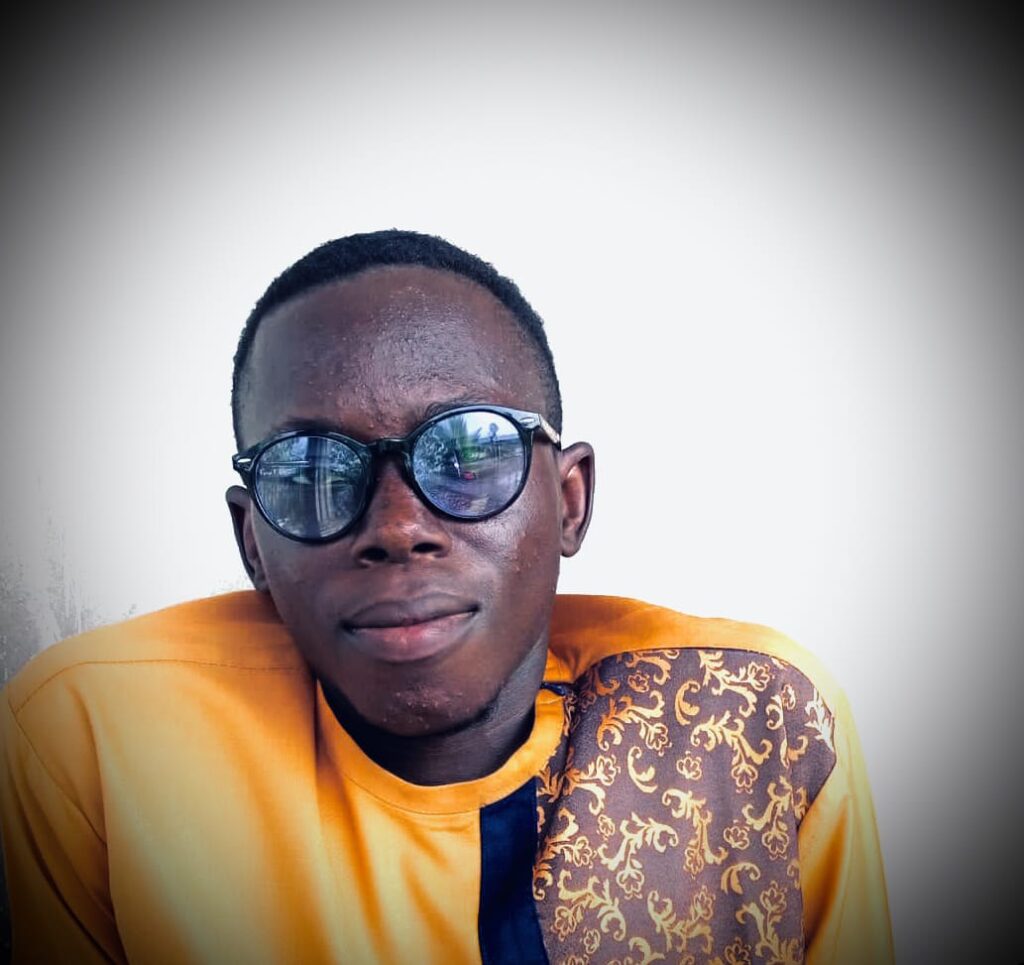
My experience in a secondary boarding school was different from when I was in primary school maybe because I was now old enough to understand my surroundings.
I thought things would be easy like it was in primary school but it was not. I had to live with about 20 people in a room and share practically all the facilities in the hostel with other people. Not having this kind of experience before hand, I lost a lot of my properties within my first year (Junior Secondary School, JSS1). It got better as I moved to JSS3.
Some of the experiences I had in between that period really helped my growth from being the novice to understanding how things worked and how to stay off the radar of some of the seniors you did not want to mess with.
Somehow it was those seniors that took interest in me. As I moved from one class to another, I was lucky to always have a senior who took interest in me and that went up until JSS3 and each one of them played a major role in my life, some of which I had to learn the hard way; from my hygiene, to my studies, to my mental toughness to having self confidence and being outspoken. Everything I learnt from them helped me scale through senior secondary school (SS1-3).
My journey through secondary school was not all rosy as it seemed. I had series of challenges along the journey. From having seniors who made it obvious on how they were uncomfortable being around me, having to go through the stress of each day, having to finish the day without having continence issues, and surviving the stares, side talks and stigma of being a disabled person who uses a wheelchair.
As I grew in age and class, I was able to adjust myself to the way of life in the school. My friends were one of the important pieces that made the journey more memorable They accepted me, embraced me as a brother and never made me feel less of myself. They encouraged me and also helped me in growing the thick skin I now have against stigma from bullying by other people because of my Spina Bifida.
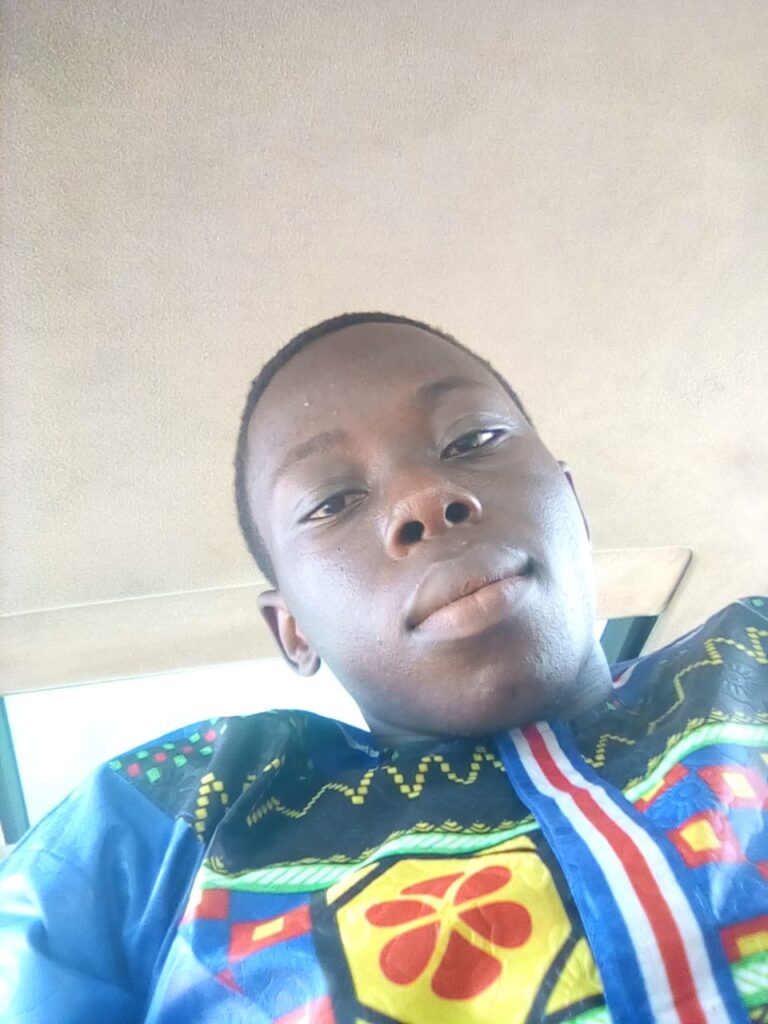
After my graduation from secondary school, I got admission to a tertiary institution in Ogun state where I studied accounting for five years, with my industrial training (IT) inclusive. Moving to the institution was a lot easier because of the experience I already had from staying in boarding school. Aside from the hustle and bustle that goes on in any Nigerian tertiary institution and having to navigate around some of the facilities that were not fully accessible, I did not have any challenge, but then there is no community a person with disability goes to without any form of discrimination whether directly or indirect, but all the experiences I have had so far made it much easier to overcome majority of the challenges and discrimination I faced.
One of the major challenges I faced growing up was with my health. I had a proper understanding of what my disability was when I was in secondary school, JSS2 to be precise.
Like I mentioned at the beginning, I was born with Spina Bifida. It is a birth defect where the spine does not fully develop and affects mobility and sensations in the body. The types of Spina Bifida include;
Occulta: Mild, usually just a gap in one to two vertebrae, mostly not noticeable.
Meningocele: Moderate, a sac of fluid pokes the gap where the spine does not fully developed.
Myelomeningocele: Severe, a sac of fluid containing a part of the spine and some nerves, in most cases it usually have an opening. Some of the major effects it has is paralysis or/and immobility of the lower part of the body, incontinence: the inability to have full control over the bowel and bladder. Due to the effect of incontinence a lot of people tend to use diapers especially those with the moderate and severe type of Spina Bifida.
Personally, I have Occulta but I am a special case. Although I do have Occulta, I still have to use a wheelchair and I also have incontinence. Incontinence has been my biggest challenge so far. It has brought a lot of stigma and discrimination because I had to use a diaper and soiled myself involuntarily. I have lost a couple of friends due to this but I do not have any regrets.
Urinary Tract Infection (UTI) was another challenge my incontinence caused because I could not control my bladder, I had urine retention in the bladder and overtime the urine got infected and caused the UTI. I had to be hospitalised every time I had UTI because the pain was always unbearable for me. I remember having to forsake my exams and missing some important classes because of UTI.
Overtime because of recurrent UTI, my kidneys got affected and I developed Acute Kidney Infection. I was hospitalised for about three weeks, underwent five dialysis just to put the kidneys in check.
It should be pointed that having a UTI does not mean the kidneys will be affected. What matters are consistent practices like personal hygiene and Clean Intermittent Catheterisation (CIC) which greatly helps overall kidney health.
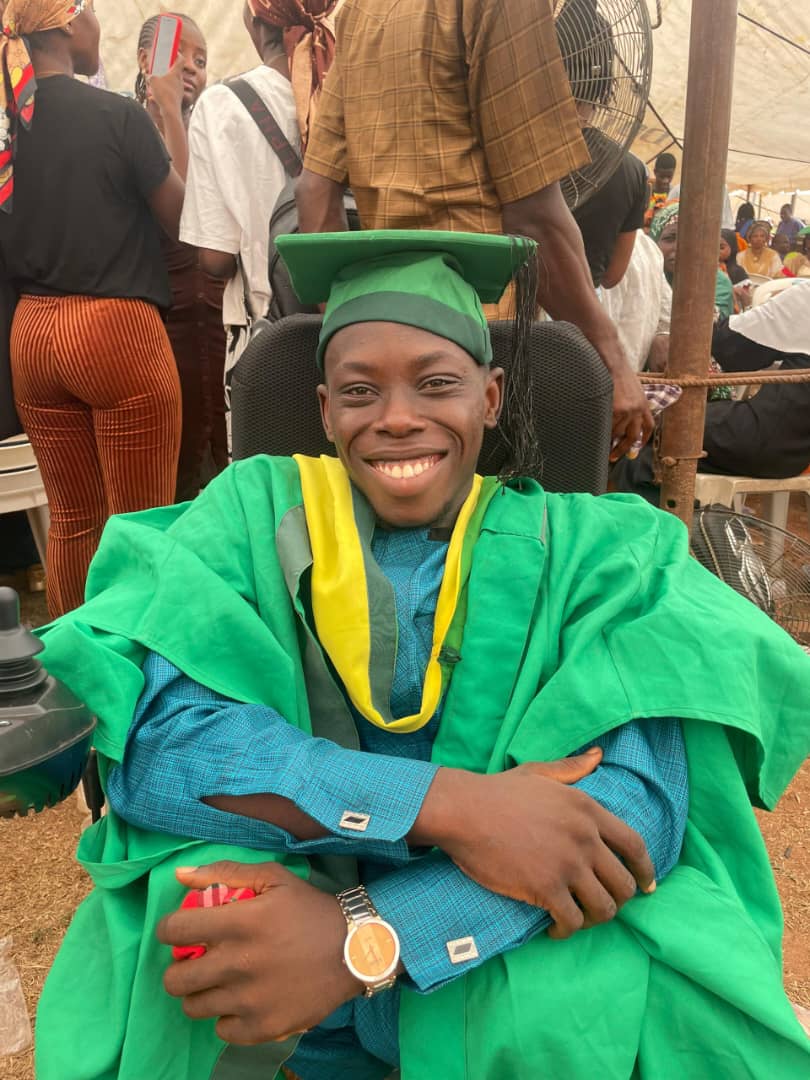
Today, I can proudly say I am a survivor who has fought though different challenges and come out victorious, and I know that even with the challenges ahead, I would be victorious. Having a disability especially one like Spina Bifida is a whole lot of work and so you should not relent.
A whole lot of challenges will come your way (mentally, health wise, intellectually, financially, socially) but you have to be strong, fight to live for another day , take good care of yourself, be determined and disciplined. Never let your disability or what people say about you weigh you down, embrace yourself and your disability, love yourself only then can you help/teach others to love you. Celebrate yourself, even your small wins, surround yourself with people that appreciate you and sees you as a person before seeing your disability.
If there is one thing I have learnt in this little life I have lived, it is: “Having a disability is not the end on the world. The world is big enough for every man to live his best life regardless of their disabilities”.