
I am a storyteller. Despite my affinity for quantitative research and the mathematical thrills that often accompany it, I so often enjoy good stories.
Stories about shame and vulnerabilities, stories about limitations, struggles and courage and the stories of our lives we often hide from the world. To me, stories are data with a soul. If you enjoy good stories, this is for you.
Among a whole lot of research literatures in the past several weeks, I stumbled upon the story of Ephrance Nadongo, a friend of a friend based in Uganda.
Learning about her experiences growing up with Spina Bifida made me reflect on the challenges people with disabilities face, the importance of family support, and the need to give every child an opportunity to grow.
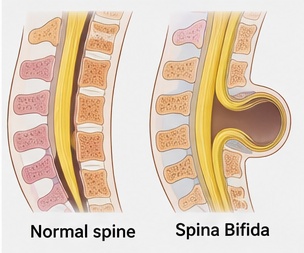
For those who do not know, Spina Bifida is a congenital condition that occurs when a baby’s spine and spinal cord do not develop completely during the early stages of pregnancy. It is a type of neural tube defect, meaning that the structure that develops into the brain and spinal cord does not close completely.
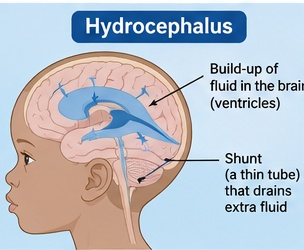
The condition varies from person to person. Some people experience mild effects, while others may have difficulties with walking, muscle movement, bladder and bowel control, or other aspects of daily life. Some people with Spina Bifida also develop Hydrocephalus, a condition in which fluid builds up in the brain and may require medical treatment, including surgery to insert a shunt.
Now, there is something about Ephrance Nadongo’s story that makes me pause and think deeply about how we raise children with disabilities. When I reflect on her journey of growing up with Spina Bifida, I see more than a medical condition.
I see a young woman whose life reminds us that disability is only one part of a person’s story. There is also childhood, family, courage, learning, independence, and the desire to live a meaningful life.
Ephrance grew up with Spina Bifida, a condition that affects the development of the spine and nervous system. She also experienced hydrocephalus and required a shunt from birth. She uses a crutch for mobility and manages additional healthcare needs as part of her daily life.
View this post on Instagram
Yet, when I consider her story, what stands out to me is not simply what she has had to manage physically. It is the way her childhood experiences helped shape her understanding of independence.
Her parents wanted her to be ready for life
One of the things I find particularly meaningful in Ephrance’s story is how her parents approached her upbringing. Like many parents, they wanted to care for and protect their daughter. However, they also understood that protecting a child should not mean doing everything for that child.
View this post on Instagram
Her mother reminded her that there would come a time when her parents would no longer be available to do everything for her. She therefore needed to learn how to do things for herself, including everyday household chores. Some of these activities took Ephrance longer than they took her siblings. Nevertheless, she was encouraged to learn and participate.
As I reflect on this part of her story, I cannot help thinking about many children with disabilities in our own communities in Nigeria. Sometimes, out of love and concern, parents do everything for them. They feed them, dress them, make decisions for them, and protect them from ordinary responsibilities.
View this post on Instagram
Of course, children need care, and some require considerable assistance. But we must also ask ourselves an important question: are we giving them opportunities to develop the skills they will need as they grow older?
Ephrance’s story reminds me that independence does not happen overnight. It develops through patience, practice, encouragement, and the opportunity to try.
The things people do not always see
When people see someone using a crutch, they may notice the person’s mobility challenges without understanding the other parts of life that require attention. In Ephrance’s case, her daily experience includes healthcare needs such as catheterisation and regular skin checks. These are aspects of her life that other people may not immediately see when they meet her.
I believe this is one reason we must learn to listen to people with disabilities rather than assume we understand their lives simply by looking at them.
We may see someone going about their daily activities and conclude that everything is easy for them. We may admire their independence without recognising the planning, effort, and support that make it possible.
View this post on Instagram
Ephrance’s experience also reminds us that people with the same diagnosis do not necessarily have the same needs. Each person has an individual story, and each story deserves to be heard with respect.
For me, this is where genuine inclusion begins: when we stop seeing only a diagnosis and start recognising the whole person.
What her story teaches us about Nigeria
As I think about Ephrance’s journey, I find myself asking questions about our families, schools, and communities.
Are we preparing children with disabilities for adulthood? Are we allowing them to participate in household activities and school life according to their abilities? Are we listening to their opinions and giving them opportunities to make choices?
I have been involved in a substantial amount of disability issues in Nigeria and abroad. In Nigeria, conversations about disability often focus on medical treatment, financial assistance, and immediate care.
These are important. Families need access to healthcare, assistive devices, inclusive education, and social support. However, I believe we must also talk about independence, personal development, and the right of every child to participate in society.
View this post on Instagram
A child with a disability should not be denied an opportunity simply because an adult assumes that the child cannot manage it. Rather, we should ask what support would make participation possible.
This does not mean forcing children to do everything alone. It means helping them develop their abilities without unnecessarily limiting their opportunities.
Ephrance’s story gives us a reason to reflect on the difference between caring for a child and preparing a child for life.
Some days are harder than others
I also appreciate the reality that living with a disability is not always easy. Ephrance acknowledges the effort required to persist, and her experiences remind us that some days bring greater challenges than others.
We should not romanticise disability or expect people with disabilities to be courageous every day. They are human beings who can become tired, frustrated, uncertain, or in need of help. Nor should we expect them to overcome every barrier through personal determination alone.
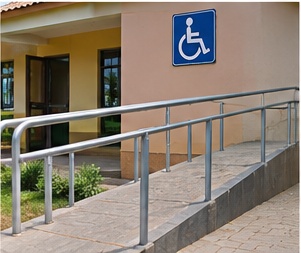
Accessible schools, supportive families, appropriate healthcare, inclusive workplaces, and respectful communities matter. People should not have to demonstrate extraordinary courage just to access basic services or participate in everyday life.
To me, true inclusion means combining personal opportunity with social responsibility. We must encourage individuals while also removing the barriers that make their lives unnecessarily difficult.
Ephrance is more than her diagnosis
When I consider Ephrance Nadongo’s story, I am reminded that no medical diagnosis can tell us everything about a human being.
Her experience of growing up with Spina Bifida offers valuable lessons about family, independence, and the importance of allowing children with disabilities to develop their abilities.
But her story should not be treated as a blueprint for everyone with Spina Bifida. People have different experiences, needs, strengths, and aspirations. What matters is that each person receives the support and opportunities necessary to live with dignity.
View this post on Instagram
There is something important for all of us to learn here, particularly parents, teachers, healthcare professionals, and disability advocates.
We must create an environment where children with disabilities are not merely protected but also prepared, encouraged, included, and respected.
And perhaps the question we should continue to ask ourselves is this:
Are we raising children with disabilities only to depend on others, or are we helping them develop the confidence, skills, and opportunities to participate in life as fully as possible?
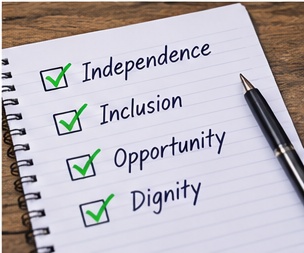
Ephrance’s story encourages us to think beyond the condition, beyond the crutch, and beyond what other people may see.
It reminds us that every child deserves more than sympathy. Every child deserves an opportunity to grow. And every person deserves the freedom to tell their own story.
This reflection is inspired by Ephrance’s personal account, “A Lifetime of Experiences Growing Up with Spina Bifida.”