
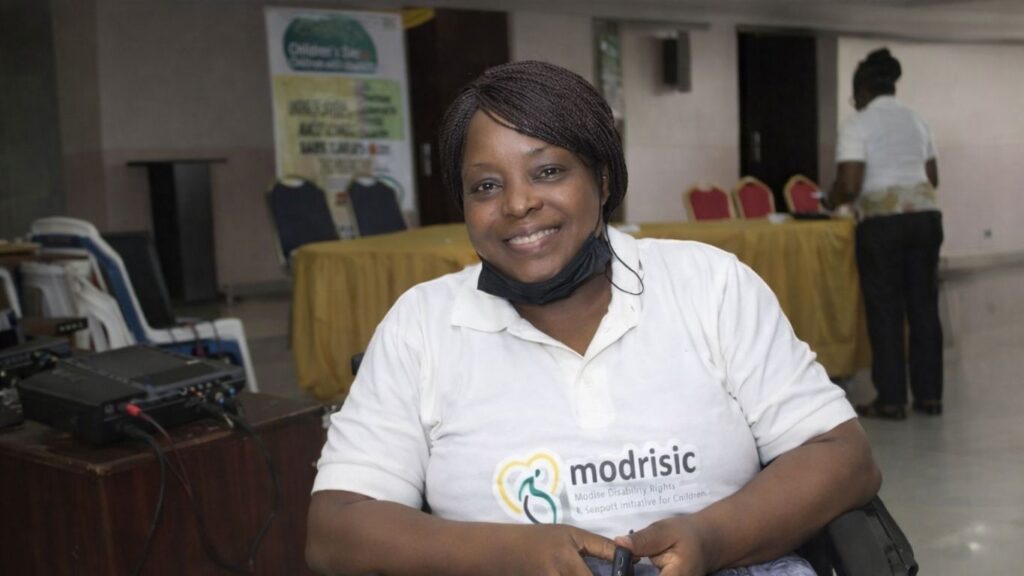
Being born in the 1960s in Nigeria is peculiar because that was the period the country gained its independence after many years of colonial rule under the British. It was a period of new beginnings and the unknown, and one of such people born in that era was Olufunke Ogunrombi.
Born on January 3, 1965, Olufunke was very different because she had Spina Bifida from birth, and it clearly affected her growth.
Spina Bifida is a congenital neurological condition that occurs because a baby’s spinal cord fails to form properly in the womb at the very early stages of pregnancy. It can lead to mobility challenges and also the inability to control one’s bladder and bowel. All these took a toll on Olufunke in her formative years.
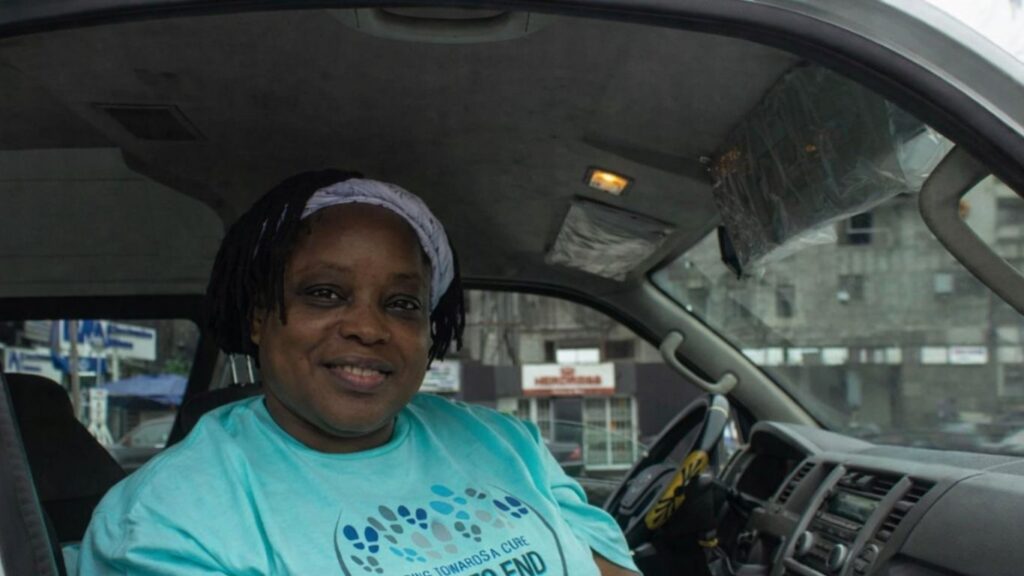
“Growing up with Spina Bifida is quite challenging because there are so many things that pop up with the defect, some abnormalities that are present from the womb,” she narrated.
“For instance, the deformation of the limbs and the nerves that is attached to the lower limbs of my body has resulted in incontinence issues. Growing up with Spina Bifida is not easy because you have to manage your bladder.
“It got to a stage that I developed a pressure sore, so I had to manage that, keep it clean and keep away from infection. There are also some bones that are not properly developed or strong enough to carry the body. Those are some of the challenges I faced growing up with Spina Bifida.”
Spina Bifida is a lifelong condition that has no cure but can only be managed with multi-disciplinary care. It was an extremely challenging one for Olufunke, but her Christian faith helped her pull through all the ordeals.
“I had absolute trust in God. I grew up in a Christian background that taught me that God creates everything on earth, and by faith in God, I was able to overcome the disappointment. I have strong faith, I have a strong positive outlook on my growth and development,” she continued.
“So, I was determined to face the challenge and overcome it. Come what may, I was ready to face it, I have been facing it up till now. I’m in my 50+ years, and I’m still growing and living with Spina Bifida, still managing it well, and I’m still facing the challenges that come with it.”
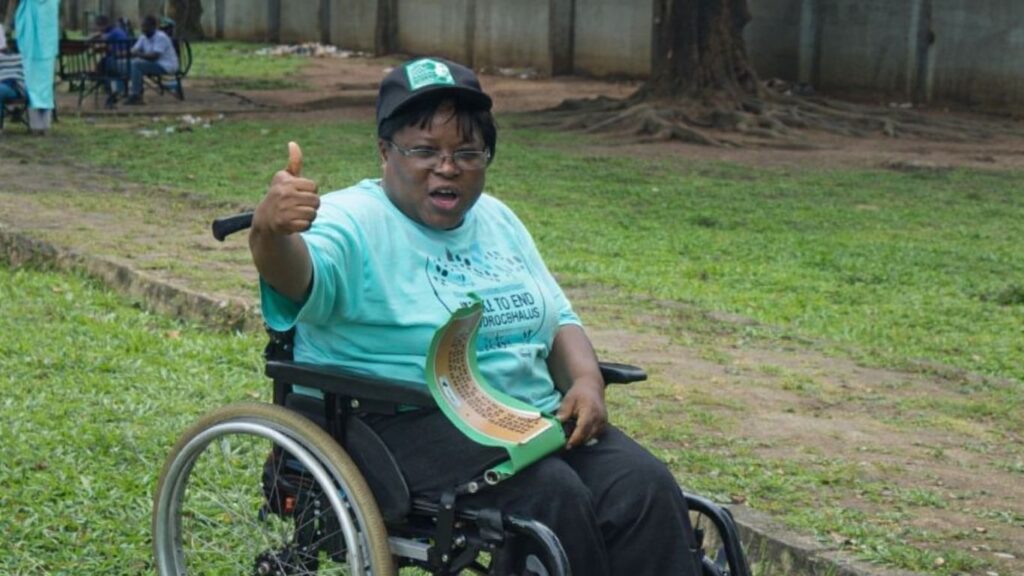
Despite the challenges that come with living with Spina Bifida, Olufunke was able to achieve a lot in her life by completing her education up to university and built a career as an entrepreneur, human resource personnel, administrator and a disability advocate.
“Gaining Independence, being able to live successfully with it, being able to have my education, even though I had a late start in securing education but I was able to manage myself through school from primary school, secondary school, university and at the same time working and living as an entrepreneur,” she said when asked what her achievements have been living with Spina Bifida.
“Going to the market to buy things I am going to sell. Those are some of my achievements that, despite all the limitations Spina Bifida brought with it, I was able to live above those limitations and have a successful life. Then, facing the future positively and hoping and believing all will be well.”
Persons living with a condition like Spina Bifida will be seen differently from the rest of society and, as such, will be subject to discrimination and stigmatisation. However, for Olufunke, it was rather different.
“I must say the society reacted positively and well, even though a lot of people are discouraged or feel bad about it. One thing is you don’t know that one is having some grave problems to deal with until you tell people this is what you are going through, and some people reacted well,” she stated.
“They are there to support you, to help you, and to assist you. Though you have some are some who might want to bully you or tell you that why don’t you sit at home, or why are you there, or is it your type they are looking for.
“I’ve only had such an experience once when I was in the university, but I was able to tell the person he doesn’t have the right to tell me how I should live my life and that God, who has created me, is able and strong enough to see me through my challenges.
“One thing about me is that I don’t see myself as different from any other person because I believe everybody has one thing or the other to deal with in their lives, so having Spina Bifida is not too much of a big deal for me to deal with.”
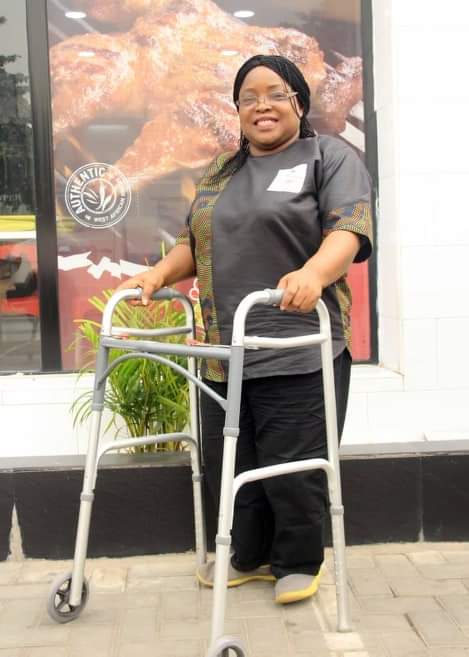
Living with Spina Bifida comes with many fears, especially fear of the future, fear of the unknown. For Olufunke, she never had any fears except the possibility of childbirth.
“I’m not sure I really have many fears living with Spina Bifida, except for the fact that sometimes I feel maybe Spina Bifida could hinder me or could affect me through childbearing or getting pregnant or maybe having a good relationship,” she asserted.
“Well. I’ve seen people with Spina Bifida who have lived successfully, have children, but I don’t know how its effect is going to be on me in procreation, so that’s just my only fear, not knowing whether I will have my baby and if it will come with Spina Bifida too or maybe I may have some complications during pregnancy. Those are only my fears, but apart from that, I don’t have any other fears.”
One thing Olufunke has held on to for all of her life is hope, and it has not made her have any regrets about her life, but live it to the fullest.
“Hope drives me to believe all will be well, and I’m progressing well, and I believe even if I don’t have Spina Bifida, those who don’t have Spina Bifida also have some health issues to deal with, so I believe that any health challenge that I have is still something that can still be dealt with,” she explained.
“So, there’s no regress. I don’t think I have anything to regret or I’m regretting about or that could me down to this level that I have lived. I really thank God for sustaining me and helping me to live.”
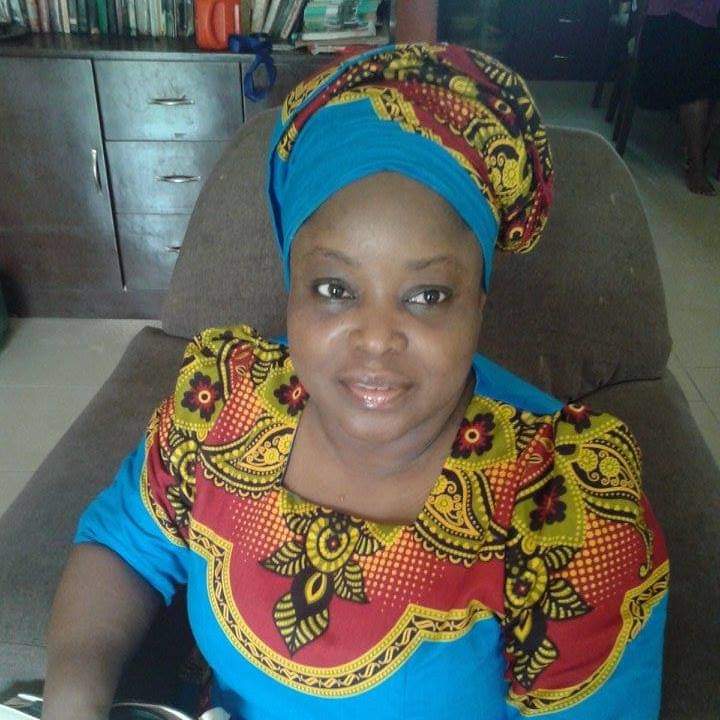
Olufunke gave persons living with Spina Bifida a message of encouragement, admonishing them to look beyond their condition and disability, while also telling parents and those who care for these individuals to offer their unconditional support and empathy always.
“As a survivor of Spina Bifida, the message I have for people living with Spina Bifida is not be discouraged and not to give up on hope. Whatever might be the problem, they should always look for a way out and not be cast down or be regretful or feel why am I here? Why is my own life like that?,” she concluded.
“I have never even had a day to think that for myself, so I believe every problem has a solution, and there will always be a way out of every situation and in life. And to parents and families of people living with Spina Bifida, I think what they need to do most is to support them, to show them love, to empathise with them, and not sympathise with them and not to feel that these children are a burden to them.
“No, they should help them to understand that they have come to live their own life, and regardless of all the limitations and everything that surrounds them, they will still grow and strive to become somebody who will make it in the future.”
Olufunke was able to thrive thanks to a great support network from her immediate family to non-governmental organisations such as Festus Fajemilo Foundation (FFF) and Spina Bifida and Hydrocephalus Association in Nigeria (SBHAN), pioneers in the care and advocacy for Spina Bifida and Hydrocephalus (SBH) in Nigeria, becoming a board member in the latter.
This led her to establish her own foundation, Modele Disability Rights and Support Initiative for Children (MODRISIC), an NGO that focused on support for children living with disabilities from disadvantaged backgrounds and advocates for the rights of the children.
Olufunke sadly passed away on March 16, 2023, at the age of 58, following an illness (not connected to Spina Bifida). Her demise was hurtful, but there is happiness that she was able to live a good life and make an impact in society despite her condition, and it is something others who have a similar experience should be able to emulate.
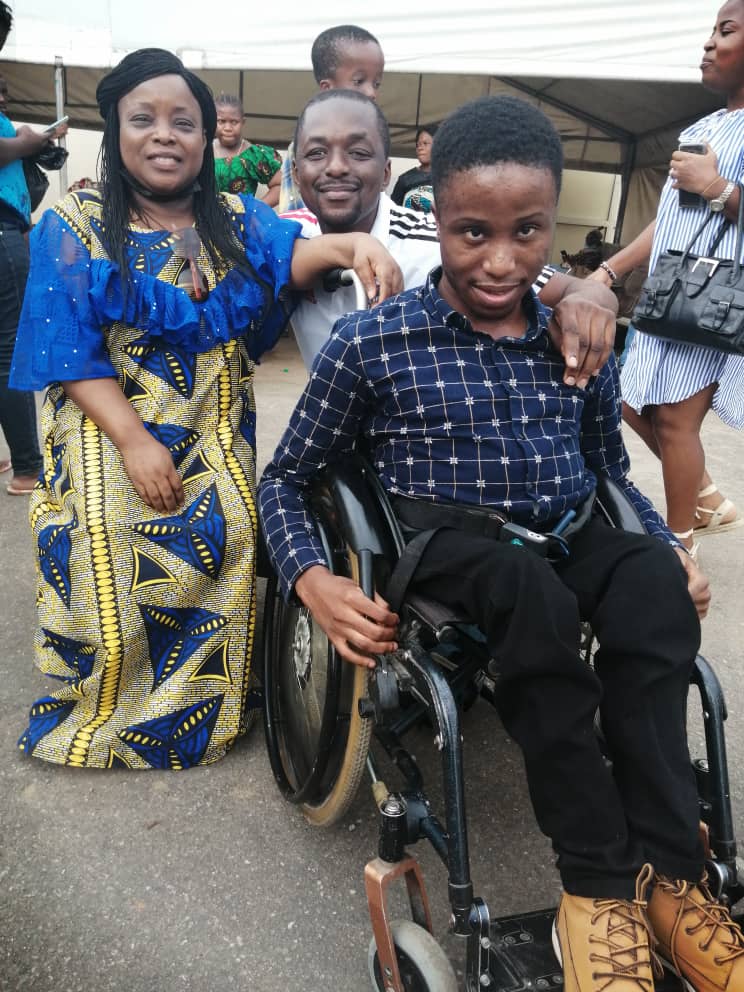
In some of the tributes to her, Daniel Kadiri, a young adult living with Spina Bifida, said: “She was my inspiration. She inspired me to do better and believe in myself. When I entered school, she was the one who advised me on what to do and relate with someone I knew to take me on a course I did not understand. I miss her so much. I always call her mom.”
Ngozi Onwuemene, a lady who also lives with Spina Bifida, said of Olufunke: “I miss her dearly. Each time I felt overwhelmed, I would call her, and she would encourage and cheer me up. I really miss her. She was someone I could talk to and understand. It was always a relief to have someone who I could share my challenges, without fear of stigma or shame. May her soul continue to rest in peace.”
While Hassan Funmilayo, father of a daughter with Spina Bifida and Acting National President of SBHAN, said: “Aunty Funke lived an impactful Life and was a symbol of strength and hope to many families and children with disabilities, especially the Spina Bifida and Hydrocephalus community.
“I remember our discussion at Igbobi, you were in pain, yet you were urging me not to give up on my daughter and passion for disability advocacy.
“Your last message to me was that God had blessed me with a special needs child so as to discover my purpose in life and to also make impact, advocate for rights and support children with disabilities.
“Thank you aunty Funke, for helping me find that purpose and fulfilment in the disability community. We will miss you greatly, but God Almighty loves you more. Will do my best to forge ahead with your passion and unwavering commitment to children with disabilities.”
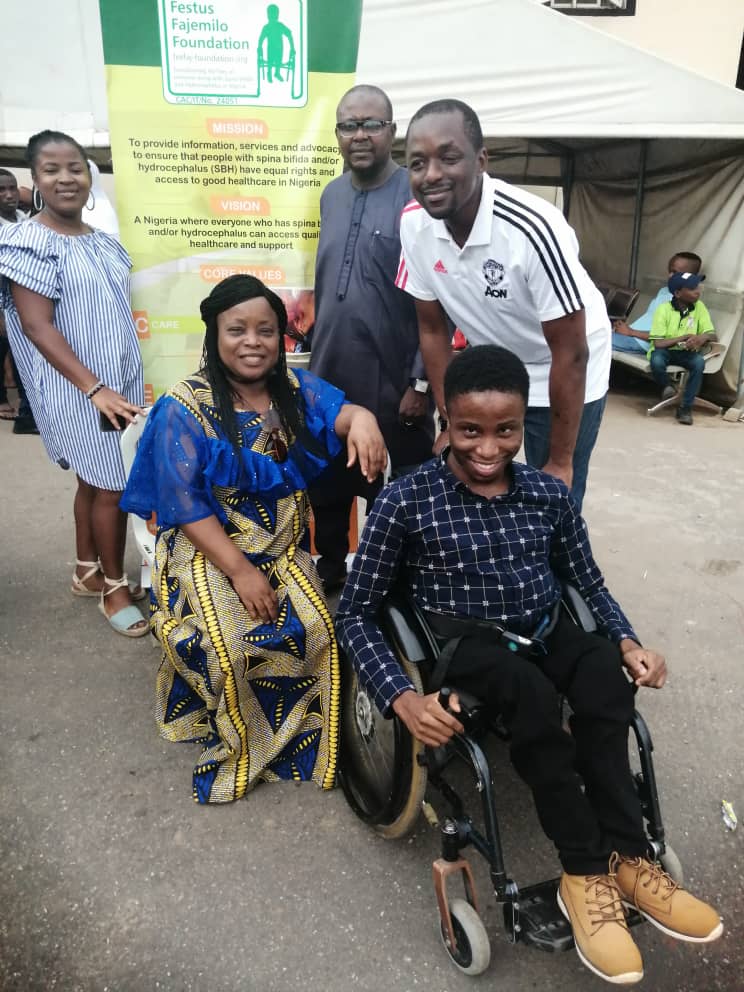
Olufunke’s life story is truly one of resilience, tenacity and courage to live beyond her Spina Bifida and face life as it comes. When this happens, what seems impossible becomes possible with the right support to make them thrive.
The interview in this article was originally conducted on November 8, 2022, four months before Olufunke’s demise. Her legacy and work continue to live on.
Inspiring article
One thing we have in common is the anxiety of wether I will be able to have children of my own.
No evidence on this but 20% of girls with spinabifida are struggling with hormonal imbalances and reproductive issues yet treatment is expensive for them.
Every girl deserves to be a mother regardless of the disability and challenges.
Rest well Maama
The journey continues in your legacy
Yes, Ephrance, women living with Spina Bifida deserve to have their own children. I know it is so many complications in one condition, but I do hope more is done to make it easier to access treatment in the near future. Keep winning. Keep shining.